


Tubes win when your formula is thick, the dosing has to stay clean, and one design will run for a long time. Flexible pouches win when you need a large printed face, a pack that ships flat and light, or artwork that is still changing. The real decision comes down to three things: viscosity, order volume, and where the product is sold.
Tube vs Pouch at a Glance
Read the table below as a set of conditions, not a scorecard. Each row says which format is easier when a particular constraint binds.
Two rows get misread most often: typical MOQ, and filling equipment. Either one can overturn a choice the formula seemed to have made.
| Dimension | Squeeze tube | Flexible pouch | What it means for you |
|---|---|---|---|
| Barrier | High barrier is achievable; one route adds a metal ply | High barrier is achievable; one route adds metallising or foil | Both reach high barrier. The question is what you give up to get there — usually recyclability or cost. |
| Viscosity fit | More forgiving at the high end | More forgiving in the middle band; thick formulas need a line configured for them | Depends where your formula sits. High band plus a filler with no heated hopper is a no, not a compromise. |
| Typical MOQ | Wide ladder: stock tubes, part print, full custom | Wide ladder: our digitally printed spout and stand-up pouches from 1,000 pieces; the same pouches gravure-printed from 10,000 | Neither format is inherently lower. The decoration route sets the floor, not the shape. |
| Unit cost driver | One-off cost sits in per-design tooling and decoration setup | One-off cost sits in printing plates priced per colour | Comparing unit price misleads. Compare landed project cost across the SKUs and reruns you actually plan. |
| Shelf presence | Continuous wrap-around face, fixed standing shape | Two large flat panels, stands or hangs | Fixed retail slot and wrap-around graphics favour the tube. Photography-led selling favours the pouch. |
| Recyclability | Laminate tubes are awkward in recycling streams; an all-PE route exists under APR/RecyClass guidance | Laminate pouches are awkward too; a mono-PE route exists | Neither side is the green one. Both have a single-material route, and both pay for it. |
| Shipping and e-commerce | Rigid, predictable, takes volume | Ships flat and light | Their failure modes differ; one is not simply tougher. Validate whichever you pick with a standard method. |
| Filling equipment | Needs a tube line | Needs a pouch line | Whichever line your filler already runs often decides the format before your formula does. |
What a Cosmetic Squeeze Tube Actually Is
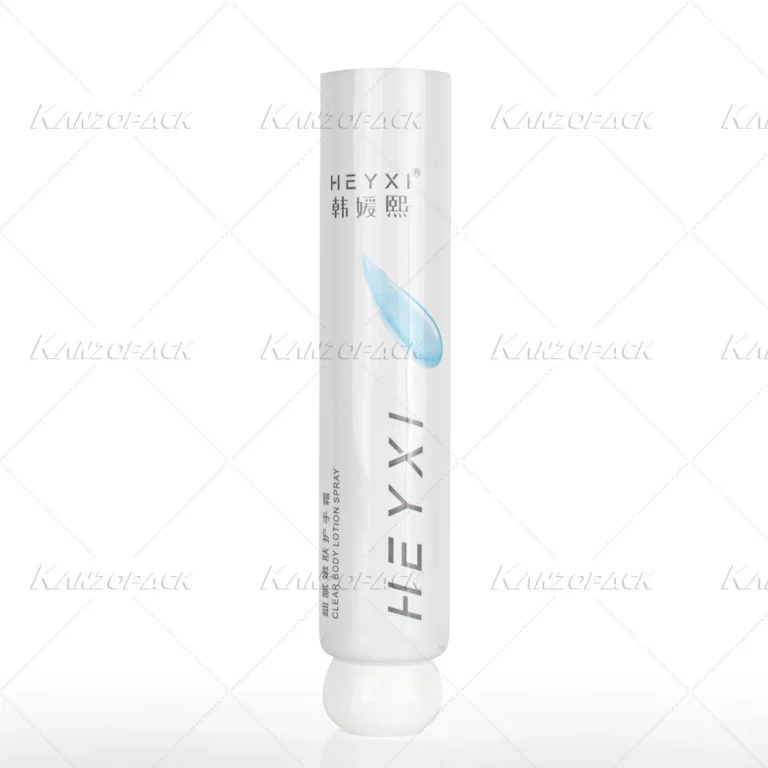
Construction: mono-PE, co-extruded, and laminate (ABL/PBL) walls
What separates one squeeze tube from another is the wall, and layer count sets the barrier ceiling and the recycling route together. The pack itself is a collapsible wall, a shoulder and a closure. The wall is single-polymer PE, co-extruded with a barrier layer, or a laminate of bonded plies sold as ABL or PBL. Airless tubes are a separate branch, and this article does not cover them.
How a tube dispenses — and why it stays clean
The orifice is small and a dose leaves in one motion, so what comes out does not go back in, which is one reason repeated dosing tends to stay clean. One mechanism matters: when you stop squeezing, the wall springs back and draws outside air in. Laminate tube design has to account for that. It is a single-sided fact, not a score against pouches.
Where tubes are made, and who makes them
We don’t make tubes — we make pouches. If a tube is where you land, you’ll be talking to a specialist rather than to us. Published specs from a Hangzhou-based facial cleanser tube manufacturer put the floor at 10,000 pieces per design across a 30–200 ml range — a per-design commitment, not a per-order one.
A tube suits a programme where one design will run for a long time; it does not suit a brand still changing artwork every few months, because each design carries its own floor.
What a Flexible Pouch Actually Is
In English search results, “pouch” on its own usually returns sewn travel and cosmetics cases. This article is about flexible packaging: printed film converted into a sealed pack.
Laminate structures and what each layer does
Every layer you add buys performance and costs you recyclability — the same trade-off tubes face. A flexible pouch is printed film laminated into plies: a print carrier, a barrier, and a sealing layer that welds to itself. Structures for supplement and cosmetic packaging have their own page.
Formats: flat sachet, stand-up, and spouted
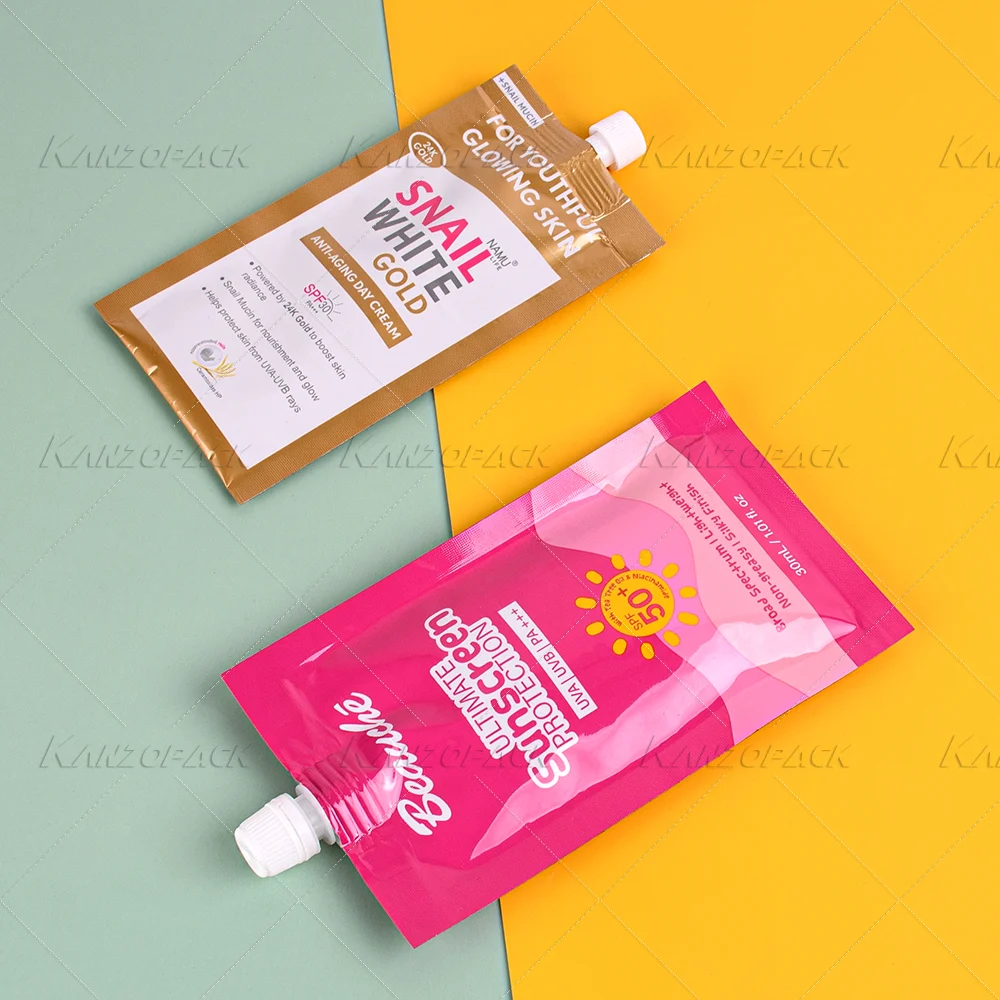
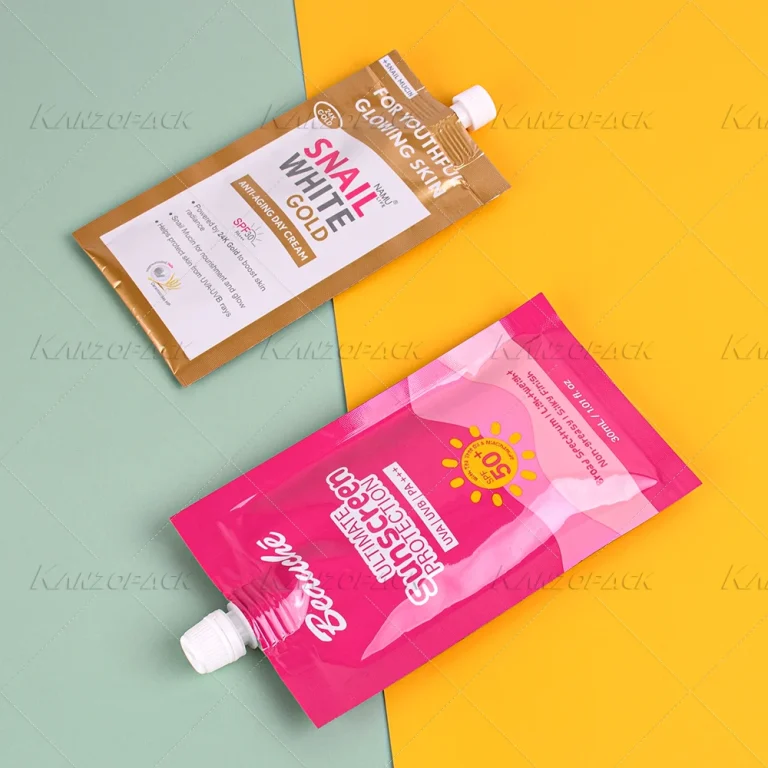
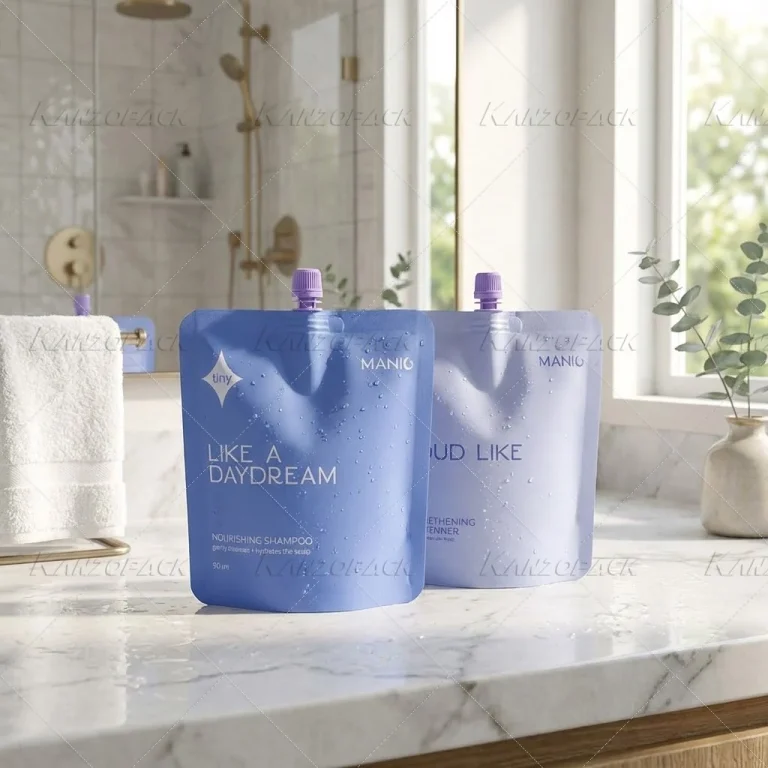
Commercially, “pouch” covers three jobs. A flat sachet without a fitment carries a mask or a trial dose. A spouted pouch works as the consumer pack itself, which is where our squeeze-style pouch format sits. A refill pouch tops up a rigid bottle the buyer keeps.
This article compares the first two against a tube. Refills are a different decision: a refill pouch is not replacing a tube, it is resupplying a bottle. For sunscreen, that bottle is usually a squeeze, pump or spray format; the rigid side of that decision is what a bottle maker such as HCC Packaging covers in its empty sunscreen bottles, pumps and sprays.
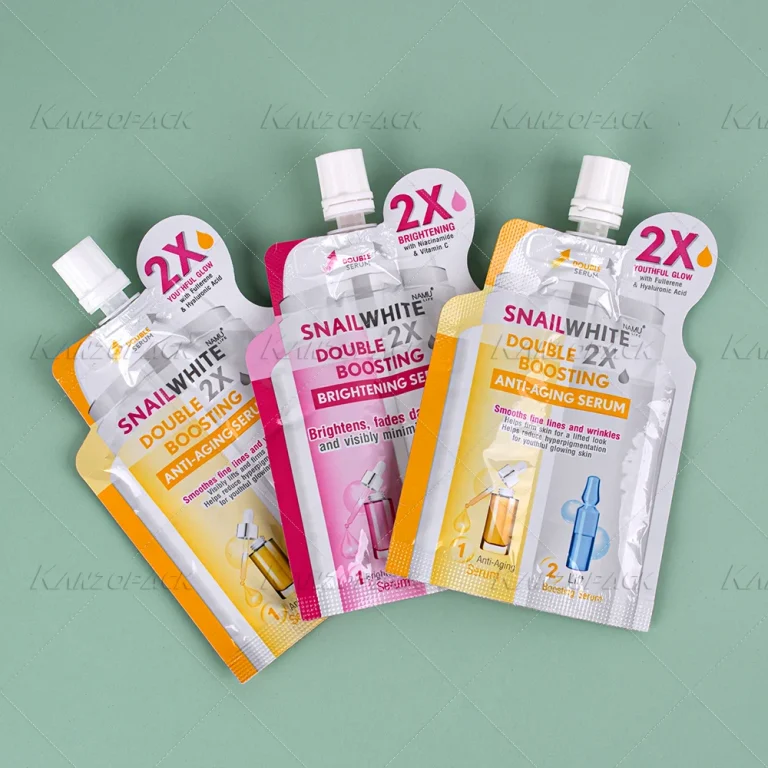
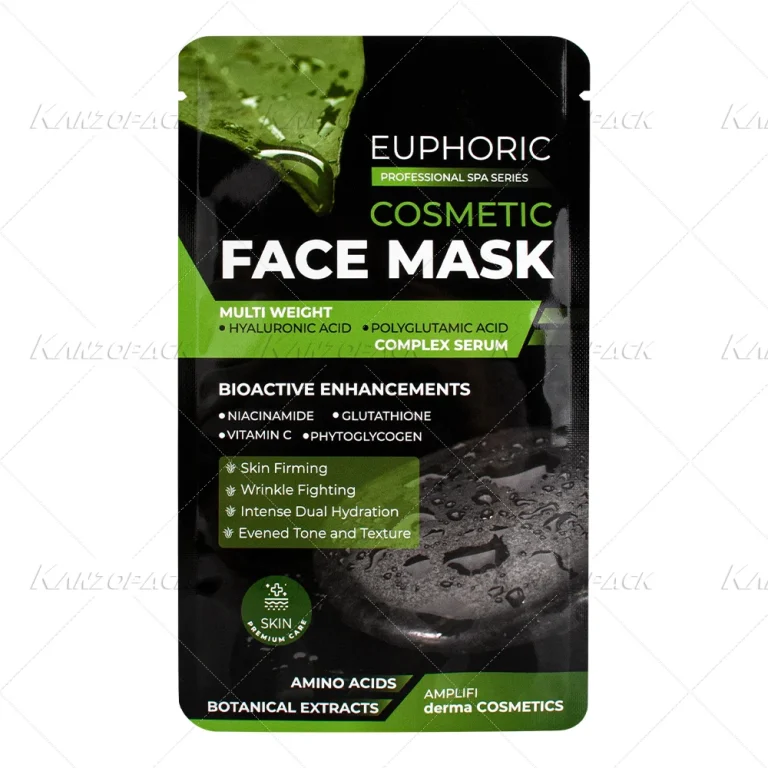
Why pouches ship flat and fill late
Pouches are printed first and formed second, so they reach the filler flat. Empty stock takes little warehouse volume, and a design change means new film rather than new tooling — where a pouch programme flexes and a tube programme does not.
A flexible pouch suits a product whose value sits in the formula and the front panel; it does not suit a product that has to hold a fixed shape on a shelf peg, because a filled pouch’s silhouette changes as it empties.
Six Dimensions, Head to Head
Barrier and Shelf Life
Both formats reach high barrier; what differs is what you trade for it. A tube adds an aluminium or metallised ply to its wall; a pouch does the same inside its laminate. That ply is a different material from the rest of the wall, which is what makes the pack hard to recycle as one thing. A metallised or foil layer is suitable when shelf life is the binding constraint; it is not suitable when you also need a single-material structure, because the two goals pull in opposite directions.
Viscosity and Dispensing
Viscosity decides feasibility here, before preference gets a say.
One viscosity instrument maker’s published bands put creams, hair masks and gels high, at 20,000–100,000+ cP, and lotions, shampoos and liquid soaps in the middle, at 1,000–20,000 cP. Whether a pouch line can pump the high band is a configuration question, not a formula property. One filler maker rates its piston-pump systems from 1 cP to 100,000+ cP, including configurations for spouted pouches, and lists a heated jacket and agitator as hopper options, not standard fit. That is why a thick formula needs the filler’s pump and hopper spec checked before it is routed into spouted pouches.
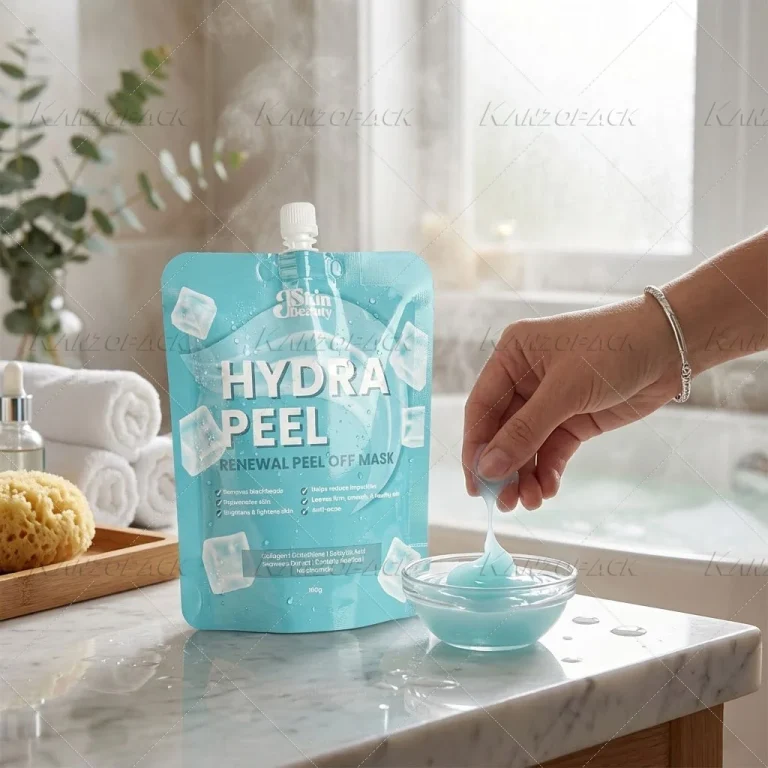
Emptying is a separate question. A 2025 peer-reviewed study that emptied packs under a standardised procedure found shampoo residue averaging 2.35% in tubes and 1.74% in pouches. In one same-product comparison, the shampoo left 2.92% in a tube and 1.08% in a spouted pouch; in another, a 500 mL pouch measured 2.67%. The authors attribute emptiability to both product properties and packaging design, so read these as a small, product-dependent gap, not a universal pouch advantage.
A spouted pouch is suitable for a formula that sits in the medium band and a filler that runs it cold; it is not suitable for a balm at the top of the high band on a line without a heated hopper and a pump rated for it, because the product will not move at line speed.
MOQ and the Economics of a First Run
Minimum order quantity belongs to the process, not the format; no unconditional rule puts pouches below tubes.
One tube supplier publishes three tiers: 100–500 pieces for stock PE or PCR tubes, 1,000–2,000 pieces with a partial print or logo, and 5,000 pieces per SKU for full custom printing — two orders of magnitude inside one company.
The pouch side splits the same way. One spouted-pouch maker publishes a floor of 5,000 pieces for conventional custom OEM work. A short-run printer publishes that a 200-piece starting point can be practical for eligible digital projects, but pouch construction and validation still determine feasibility.
Our own floors follow the same logic. We run an HP Indigo 200K digital press in-house, so our digitally printed spout and stand-up pouches start at 1,000 pieces; gravure-printed, the same pouches start at 10,000 pieces and three-side-seal pouches at 30,000 pieces. That span sits inside the range those published figures cover. The mechanism is setup cost: a gravure run of 10,000 pieces split into two runs of 5,000 pieces pays setup twice. That is most of why flexible packaging MOQs are what they are.
One-off costs land elsewhere. On the pouch side, printing cylinders priced per colour: one converter publishes USD 90–120 per cylinder, or USD 450–600 for a five-cylinder set. On the tube side, tooling per design: an equipment maker’s published figures put an injection tube shoulder mould at USD 3,000–8,000.
A digital short run suits a brand validating one SKU; it does not suit a spouted, high-barrier build, because the construction, not the print method, sets that floor. Our figures sit on our current minimum order quantity.
Shelf Presence and Perceived Value
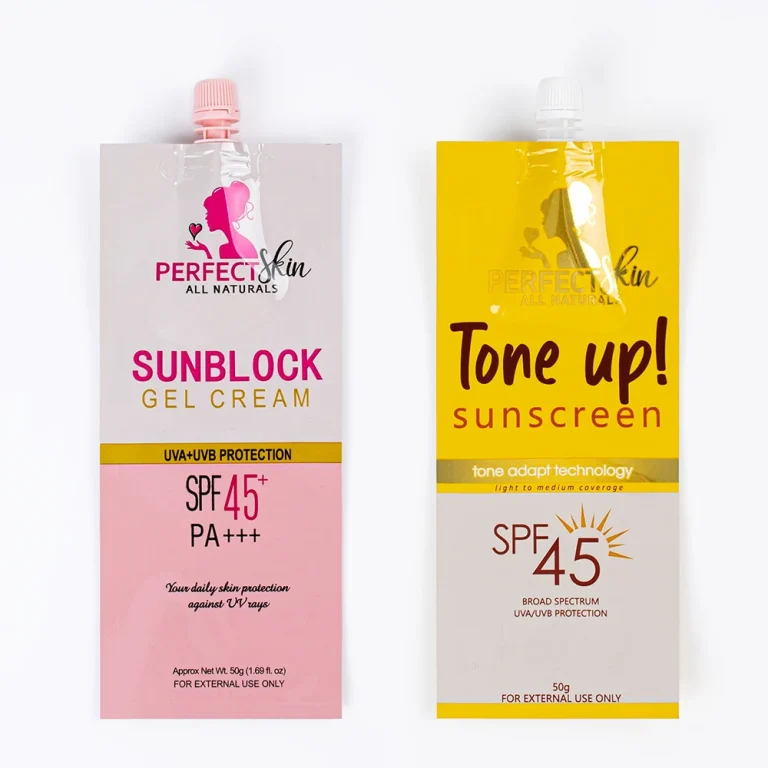
Where the first impression happens decides this one. A tube presents a continuous wrap-around surface and keeps one silhouette from full to empty. A pouch presents two large flat panels and, in the stand-up format, a shape that photographs well. A pouch suits a brand whose first impression happens in a product photo; it does not suit an SKU that has to sit in a fixed retail planogram slot, because it will not hold a consistent silhouette as stock rotates.
Recyclability: What “Recyclable” Actually Means Here
Neither format is the recyclable one. Multi-layer laminates are awkward on both sides: near-infrared sorting reads the outer layer only, and dissimilar polymers do not reprocess together.
Ours is mono-PE: we make single-material PE pouches designed for existing PE recycling streams, and the spout and cap have to become PE too, because PP closures are only limitedly compatible in a PE stream. On the tube side, an all-PE tube has a defined route under APR and RecyClass design guidance.
Downstream, the picture is narrower. In the United States, How2Recycle notes that most curbside and drop-off programmes do not accept plastic bags, wraps and films, so store drop-off remains the main consumer route for eligible PE film; its refreshed Store Drop-off label drops the chasing arrows for a collection-bin icon. Sorting film at materials recovery facilities is still at pilot stage.
Regulation (EU) 2025/40 applies from 12 August 2026. Its Article 3(49) defines contact-sensitive packaging by reference to the EU cosmetics regulation, so cosmetic packs fall in that class. Under Article 7(1) that means a 10% minimum recycled content for contact-sensitive non-PET plastic packaging in the EU — not the 35% band covering other plastic packaging — by 1 January 2030 or 3 years after the implementing act enters into force, whichever is the latest.
A mono-PE pouch suits a brand that wants its pack to enter an existing PE stream; it does not suit a product that needs a metal barrier, because you cannot have both in the same wall.
E-commerce Shipping and Damage
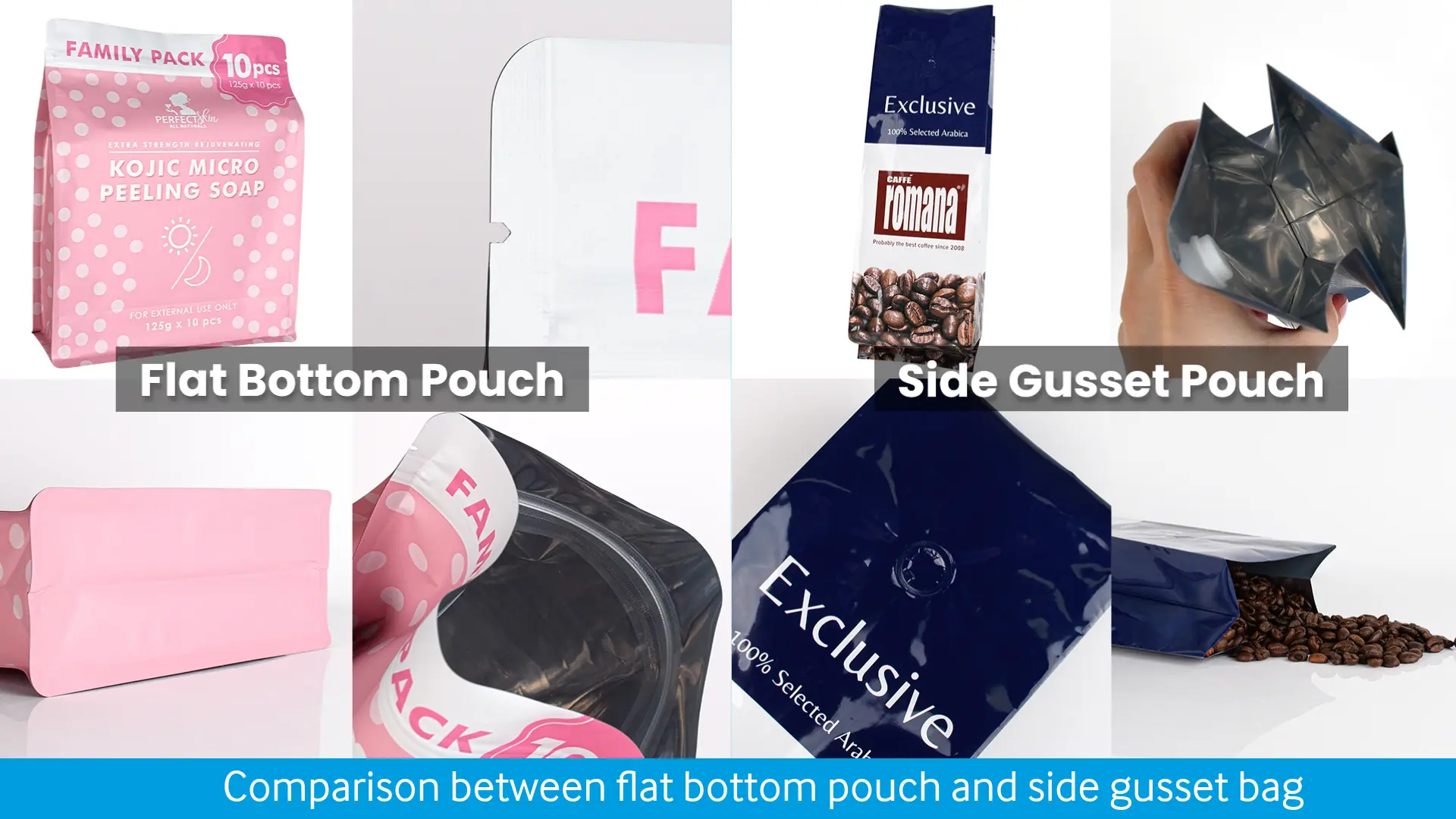
The two formats fail differently, and only one side has public evidence. On pouches, stress concentrates at the bottom corners of a flat-bottom pack and the lower side seals of a stand-up pack — how the bottom gusset works explains that geometry. There is no comparable published failure-mode evidence for tubes, so this section makes no comparison. Use ASTM D3078 as one package-integrity check for gross leaks where the pouch holds enough headspace gas; transit validation is a separate exercise.
When a Tube Is the Wrong Choice
Three situations where we would point you at a pouch.
You are still changing artwork. Tube minimums and tooling are committed per design, so every revision repays the entry price. If the design is not settled, validate it on a digitally printed pouch, where a change costs film rather than tooling.
You are packing a refill for a bottle the customer keeps. A refill has to ship flat and pour into something else. A tube is not built for that job; a refill pouch is.
Your first impression happens in a product photo. A tube earns its keep in a fixed retail slot. On a product page the buyer sees one flat image, and two large printed panels do more work there than a curved wall.
None of this makes a tube a worse pack. It makes it a pack that rewards commitment — to one design, one shape, one long run.
When a Flexible Pouch Is the Wrong Choice
Three situations where we would point you at a tube.
A thick formula in a small pack. If your product sits at the top of the cream and hair-mask band and your filler has no heated hopper or high-viscosity pump, a pouch line will not move it at speed. Small fill volumes make that worse, because the slow part of the cycle repeats on every unit. A tube handles the same formula without a heated option.
Retail display governs the pack. If a channel specifies a fixed facing or a peg, the pack has to hold one silhouette from full to empty. A pouch changes shape as it empties. A tube does not.
A very small trial run that also needs a spout and high barrier. Low digital starting points apply to eligible digital projects; a spouted, high-barrier construction is not one of them. Stock or part-printed tubes reach lower for a first trial.
Whether we can solve it depends on the formula — send us a sample and we’ll tell you.
Pick by Product Type
Two questions do most of the sorting: which viscosity band the formula sits in, and where the buyer meets the pack. Read the table as a starting position, not a verdict; the right-hand column is where each recommendation stops being true. Where the table says Either, the tie-breaker sits outside it.
For most skincare and personal-care products, viscosity decides whether a tube or a pouch is technically feasible; channel, order volume and filling equipment then decide between the feasible options.
| Product type | Recommended format | Why | Watch out for |
|---|---|---|---|
| Facial cleanser | Tube | Frequent dosing, clean cut-off, viscosity sits in a comfortable range | Minimums are committed per design — do not open one until artwork is settled |
| Lightweight lotion | Either | Sits in the medium band; both formats run it | The decision usually belongs to your filler’s existing line, not to the formula |
| Rich cream and balm | Tube | Top of the high band; a pouch line reaches it only when configured for it | If you still want a pouch, confirm the line has a heated hopper and a pump rated for the band |
| Serum and oil | Neither is the default | This class usually goes to droppers and pump bottles | Do not sacrifice dosing precision to standardise the format |
| Hair mask | Tube (retail) / sachet (single dose) | High band; single-dose is where the flat sachet is strongest | The same formula needs separate filling validation in each format |
| Body wash and refill | Pouch (refill) | A refill is a different decision — it resupplies a bottle, it does not replace a tube | Do not carry refill sustainability claims over to a tube-versus-pouch choice |
| Sunscreen | Tube | Frequent dosing plus a fixed retail facing | Regulatory and stability requirements make a pack change a revalidation |
| Sample and travel size | Sachet / small pouch | Single dose, flat, light | A sachet is a one-time opening — wrong for anything reclosed daily |

On the refill line specifically, one LCA commissioned by a pouch converter and carried out by PTIS reported up to 63% less plastic by weight for a pre-made spouted pouch than for an equivalent rigid plastic bottle. That figure reaches us through the trade press, published alongside a Flexible Packaging Association fact sheet. That comparison is against a bottle, not against a tube.
Key Takeaways
- How a pack is printed sets the order floor; whether it is a tube or a pouch does not.
- Viscosity sets what is possible; preference only chooses among what remains.
- Multi-layer builds are awkward for recyclers on both sides, and each single-material route costs you barrier.
- Ask your contract filler which line they run before you commission artwork.
- We make pouches and not tubes, which is why both “wrong choice” sections above are written seriously.

