


What Does Gusset Mean in a Packaging Bag?
In packaging, a gusset is a folded panel built into the side or bottom of a bag. When the bag is filled, the gusset opens up, giving the bag extra depth and helping it carry more product without needing a wider front panel.
Understanding Gusseted Bags
A gusseted bag, which KanzoPack makes as custom gusset pouches, is a pouch made with these folded panels, either on the sides or at the bottom. The gusset is what lets the bag expand and take on a more stable shape once it is packed.
Side gusset bags expand outward from both sides, which helps increase capacity while keeping the front and back panels clean for branding. Bottom gusset bags open at the base, creating a flatter bottom so the package can stand more securely on shelves.
You will see gusseted formats used for food storage, retail packaging, and shipping because they balance capacity, handling, and shelf display. Knowing whether you need side gussets or a bottom gusset helps you pick a structure that protects the product and presents it well.
Basics and Types

Flat Bottom Pouches (Box Pouch)
Flat bottom pouches, also called box pouches, are built around a flat base with multiple panels. The bottom forms a stable footprint, and the side panels open to create a box like shape once the bag is filled.
This format is popular for retail shelves because it stays upright more easily and looks structured. Whether it can stand when empty depends on the film stiffness and the added features, but it usually holds its shape better than softer bags.
If you want a premium shelf look and clear front facing presentation, flat bottom is often the safer choice.

custom side gusset pouches
Side gusset pouches expand from the left and right folds. When filled, the bag becomes deeper without widening the front panel too much, so the main artwork stays readable.
Compared with flat bottom pouches, side gusset bags usually use fewer panels and have a simpler build. That often makes them a more cost friendly option under the same material and printing setup.
They stand best after filling. For shelf display, brands often pair them with the right fill level and film stiffness so the bag looks tidy and stable.
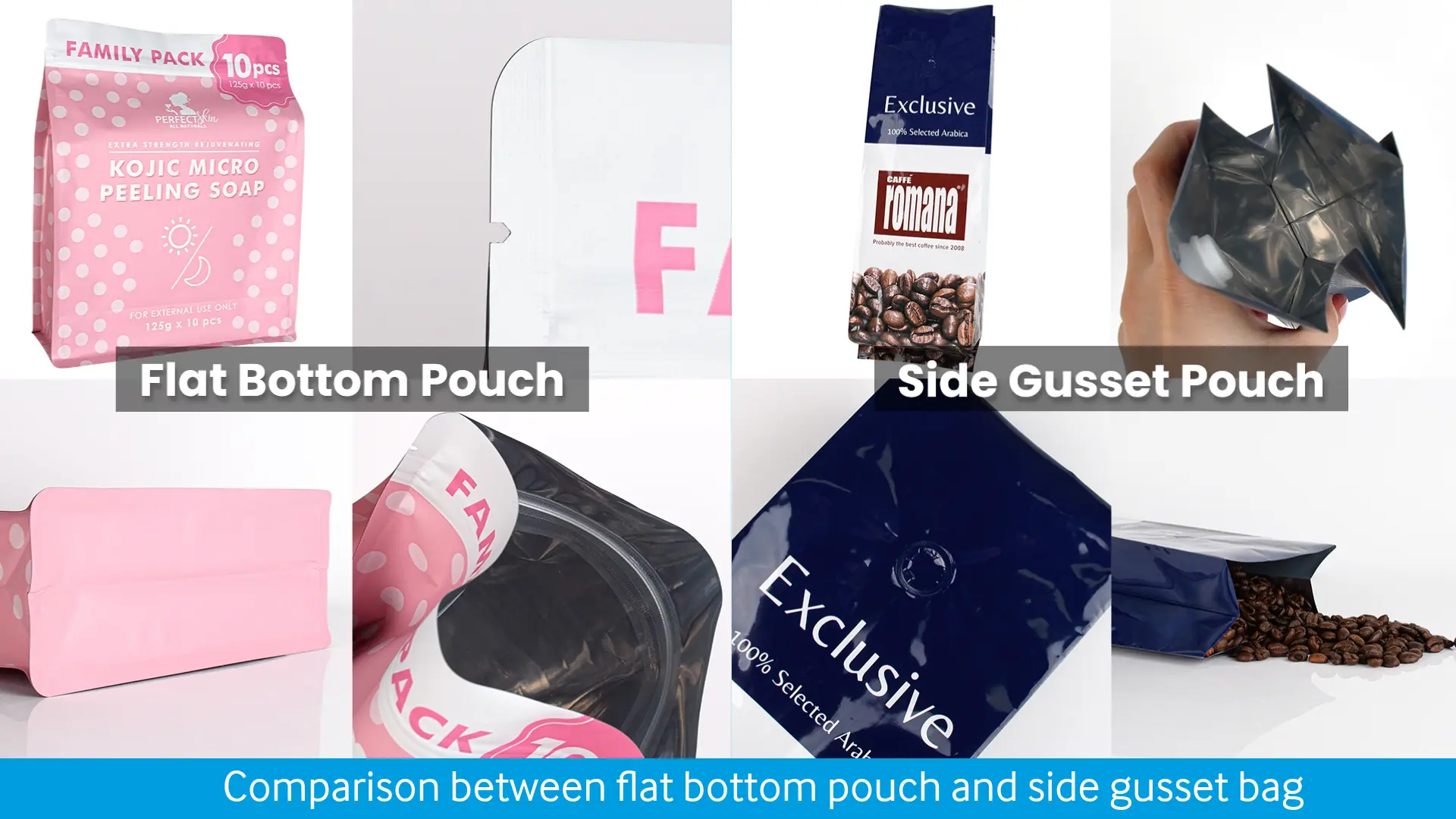
Comparison between flat bottom pouch and side gusset bag
| Feature | Flat Bottom Pouch | Side Gusset Bag |
|---|---|---|
| Structure | Flat base with multiple panels, box-like shape when filled | Two side gussets with a bottom seal, expands into depth when filled |
| Stability | More stable on shelves, holds shape better with stiffer films | Stable after filling, can feel softer when empty |
| Capacity | Efficient for dense fills and a structured look | Often fits more volume at a similar front width |
| Shelf Display | Structured, premium shelf presence | Clean and practical, best when fill level is consistent |
| Branding Space | More usable panels for design and information | Strong front and back panels, side panels expand with volume |
| Cost | Often higher due to panel count and extra sealing steps | Often lower with a simpler build under the same material setup |
| Material Usage | Often higher because of panel count and sealing | Often lower because the structure is simpler |
| Best For | Coffee, tea, premium retail, dense fills needing a box-like look | Pet food, snacks, bulky items, cost-sensitive projects |
| Manufacturing | More steps, lead times can be longer | Fewer steps, production is often faster |
Common Uses
Gusseted bags package many everyday products, especially when you need more capacity without a much bigger footprint.
- Food items like coffee, tea, snacks, grains, powders, and pet food
- Non-food items such as detergents, hardware parts, and household supplies
With the right material structure, gusseted formats can improve protection during storage and shipping. For retail, a bottom gusset style is often chosen when shelf stability and a tidy display matter.
Material Varieties
Material choice controls barrier performance, stiffness, and end-of-life options. Common structures include:
- Plastic films: strong sealing and moisture resistance
- Paper-based laminations: natural look, barrier depends on inner layers
- Mono-material films: designed to improve recyclability in some markets
- Compostable options: may work for specific products, performance varies by film type and local disposal conditions
Select the structure based on product needs, filling method, and how the bag will be stored and shipped. Material innovation is moving fast, so it helps to confirm real barrier targets and run tests before scaling.
Gusseted vs Non-Gusseted Bags
A gusseted bag has extra material added to its sides or bottom, allowing it to expand and hold more items, while a non-gusseted bag lacks this feature and remains flat.
| Feature | Gusseted Bags | Non-Gusseted Bags |
|---|---|---|
| Capacity | High - Expandable for bulky items | Moderate - Limited to flat items |
| Storage (Empty) | Takes more space due to folds | Excellent - Lies completely flat |
| Storage (Filled) | Excellent - Stands upright | Good - Compact design |
| Flexibility | High - Adapts to various shapes | Low - Best for uniform items |
| Durability | Excellent - Better tear resistance | Good - Depends on thickness |
| Cost | Higher - More material needed | Lower - Simple manufacturing |
| Best For | Coffee, snacks, pet food, retail | Documents, clothing, light items |
| Branding | Excellent - Large print area | Moderate - Limited space |
Features of Gusseted Bags
Improved Stability
Gusseted bags have a unique design because the extra panels can open up when the bag is filled. What changes is where the bag gains depth. With side gusset bags the pouch expands outward from both sides. It usually stands best after filling, because the product creates the shape and support. With bottom gusset bags such as flat bottom pouches, the base is formed to sit flat. The bag is easier to keep upright on shelves and during transport, even before it is fully packed. A steadier base helps reduce tipping and corner stress. That often means fewer leaks, fewer crushed packs, and less product waste in transit.Customization Options
Both formats can be printed, but the usable “canvas” feels different once filled.Side gusset bags keep a cleaner front and back panel when packed. The side panels take some of the volume, so the main artwork can stay readable.
Flat bottom bags offer more panel surfaces and a more box-like look. That can work better for premium shelf display when you want the pack to look structured.
Selecting Gusseted Bags
Material Consideration
Start with what the product needs to block. Oxygen, moisture, and light are the usual drivers. Then match the structure to the bag style you choose.
Foil gusseted bags can give strong barrier and stiffness, so they are common for products like coffee or powders. The downside is end-of-life options are often limited, so recycling is not always realistic.
Clear gusseted bags made from polyethylene are often easier to route into recycling systems when designed as mono-material. Protection can be lower, so barrier layers and thickness choices matter more.
If you are considering biodegradable or compostable films, treat them as a separate project. Performance and local disposal conditions can vary a lot, so you want to test with your real filling, sealing, and shipping setup.
Size and Shape
Pick size from the filled product volume first, then decide how you want the pack to behave on the shelf.
Side gusset bags are a good fit when you want efficient use of shelf depth and a simpler structure. They tend to look more “pillow” or “brick” shaped once filled.
Bottom gusset bags such as flat bottom pouches are chosen when you want a stable base and a more premium, box-like display. They usually need more material and a more complex build.
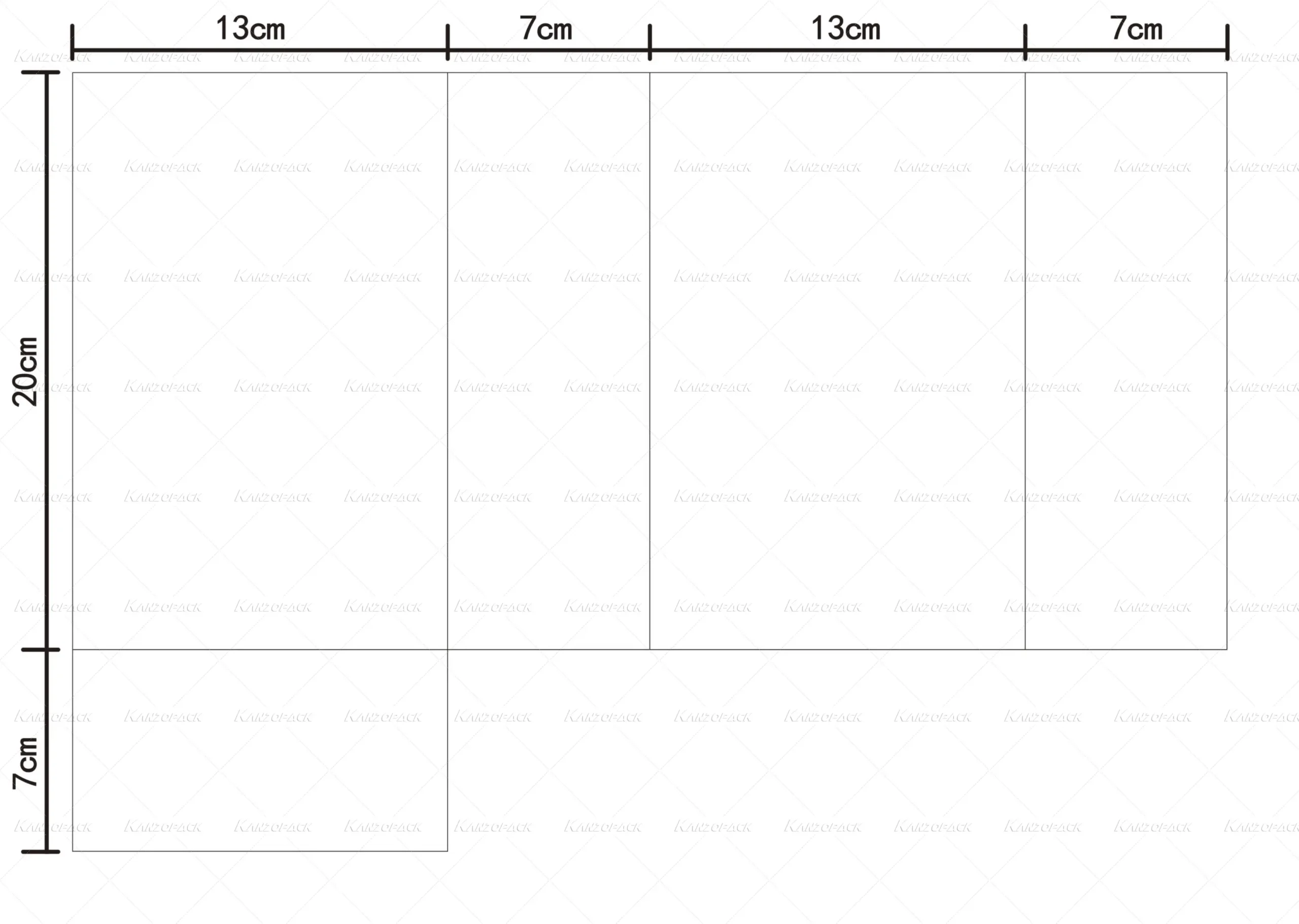
For sizing, keep measurements consistent across quotes. Use the same reference points for width, height, and gusset depth, then confirm the target fill weight so the bag holds its shape without over-stressing seals.
For example: 250g bottom flat gusset bags diecut line 👇
What are Gusset Bags Used For?
Retail Packaging
In retail, gusset formats help products look fuller and more stable on shelves. Flat bottom pouches are often used when the goal is a structured, premium look. Side gusset bags are often used when you want efficient packing and a clean front panel for branding.
For shelf impact, brands usually decide early on details like zipper, tear notch, window, matte finish, and hanging options. These choices affect both the shopper experience and how the bag holds shape after filling.
Storage Solutions
For storage and non retail use, gusseted bags are chosen for better capacity and a more stable shape when filled. They help organize items and reduce shifting in cartons. This can be useful for tools, accessories, garments, and documents when the goal is neat packing and better protection from dust and moisture.
Food Industry
For food, the material choice normally starts from barrier needs. Coffee and aroma sensitive products often need strong oxygen control. Dry goods and snacks may focus on moisture control and seal strength.
Gusseted formats can support common add ons like degassing valves, zippers, and stronger laminations. The best structure depends on product type, fill weight, and how the pack will be shipped and displayed.
Summary
Gusseted bags use side or bottom folds to create extra depth once filled. Side gusset bags are a practical pick for efficient packing and a clean front panel. Flat bottom pouches are often picked for a more structured shelf look and stronger standing performance.
If you match the structure with the product barrier needs, fill weight, and display plan, you usually get better protection and a cleaner presentation with fewer packing issues.
A gusseted bag has extra material on the sides or bottom, allowing it to expand. This design increases storage capacity and stability.
Gusseted bags have expandable sides or bottoms for more space. Non-gusseted bags lay flat and do not expand.
Key features of the gusset bag include expandable sides or bottoms, increased storage capacity, and enhanced stability when filled.
Choose a gusseted bag for items requiring more space or needing to stand upright. They are ideal for bulkier goods.
Ready to Source Gusseted Bags?
If you are buying gusseted bags and want a supplier you can verify, KanzoPack states its production follows ISO9001:2015 and BRCGS requirements, with SGS export inspection standards referenced on its site.
Send your product type, target fill weight, and the bag style you are considering. We will recommend side gusset or bottom gusset, share a dieline for approval, and quote based on your real use case.
We also support worldwide shipping by ocean or air, can work with common trade terms, and can ship with your own forwarder if you prefer.
To start, take a look at our factory and certifications.